
High Courts
Civil & Commercial Litigation
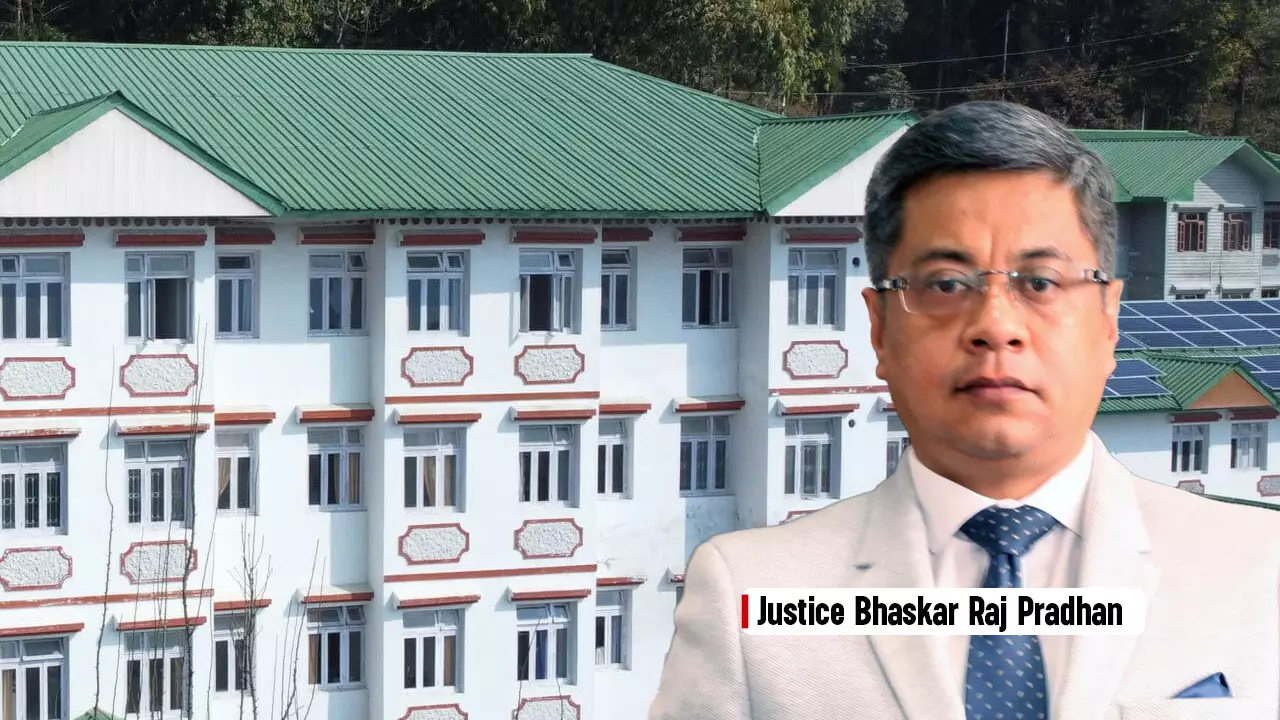
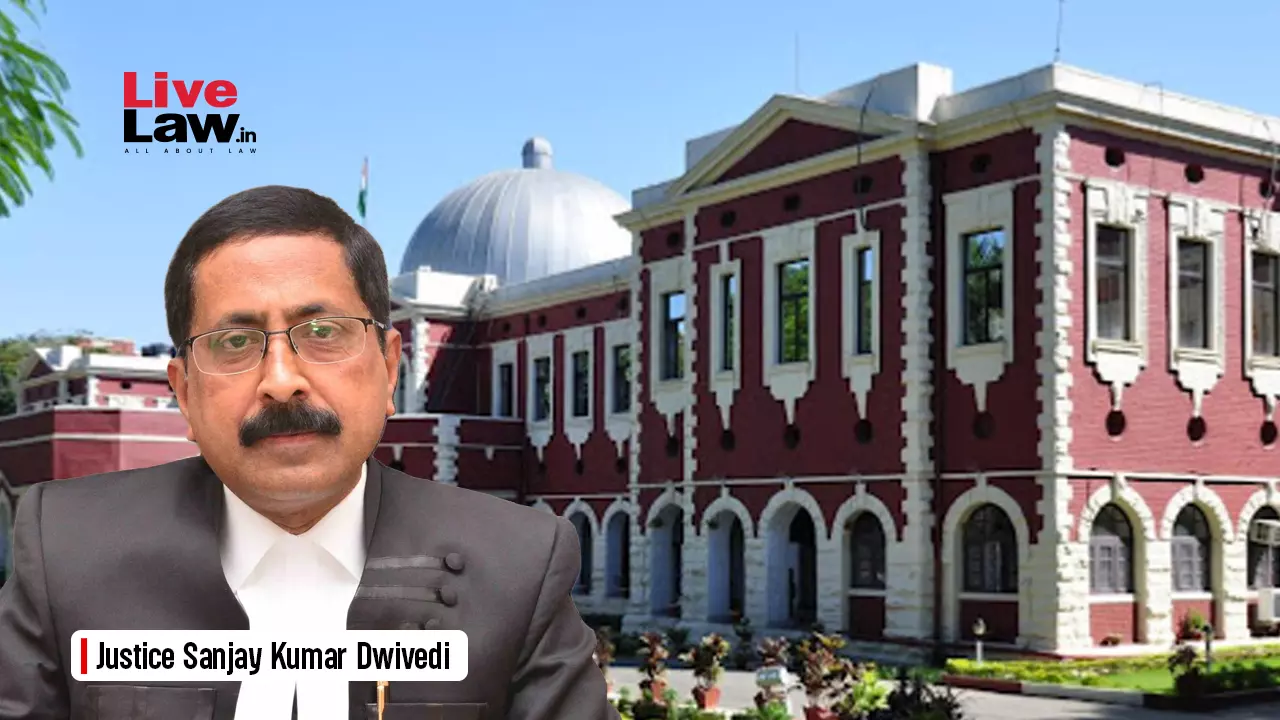


You switch on the TV in a hotel room, and you have entered into a licensing quagmire! Does a hotel need to pay royalties to copyright societies for the content in the television sets of their guest rooms? The recent dispute between IPRS and Hotel Appolo & Tours Private Limited deals with this question. The dispute began in the District Court of Darjeeling, which refused to grant IPRS an interim injunction against Hotel Appolo & Tours Private Limited. In an order […]
The Bombay High Court has held that a contract which is inherently determinable cannot be specifically enforced and, consequently, an interim injunction cannot be granted to protect such a contract. The Court observed that when the MOU was determinable by its very nature, specific performance of the same could not be insisted upon. Justice Aarti Sathe was hearing an Appeal from Order filed against an order of the 5th Joint Civil Judge, which had temporarily restrained the Appellant from transferring, alienating or creating third-party interest in 5,200 sq. mtrs. of Transferable Development Rights (TDR), which was the subject matter of an agreement dated July 13, 2022. The dispute arose after the Respondent agreed to purchase TDR from the Appellant. Under the MOU, the Appellant was required to obtain the Development Rights Certificate within the stipulated period. As the Appellant was unable to obtain the DRC, it issued a notice dated October 18, 2023 cancelling the MOU. The Appellant contended that Clauses 4A and 4B of the MOU provided for repayment of the amount paid by the Respondent in the event of cancellation or failure to obtain the DRC within the stipulated period. It was submitted that the MOU was, by its very nature, a determinable document and therefore became unenforceable under Section 14(d) of the Specific Relief Act. The Court reproduced Clauses 4A and 4B and observed that both clauses had to be given a holistic interpretation and could not be read in isolation. It held that, on reading the two clauses, it was clear that the MOU was of such a nature that it was determinable. “… the same would be inherently determinable as the parties do not have to assign any reason to terminate the same and the terms of termination are envisaged in the contract itself. Once that being the position, then the provisions of the Act cannot be pressed into to specifically perform the obligations contained therein,” the Court remarked. The Court further held that there was
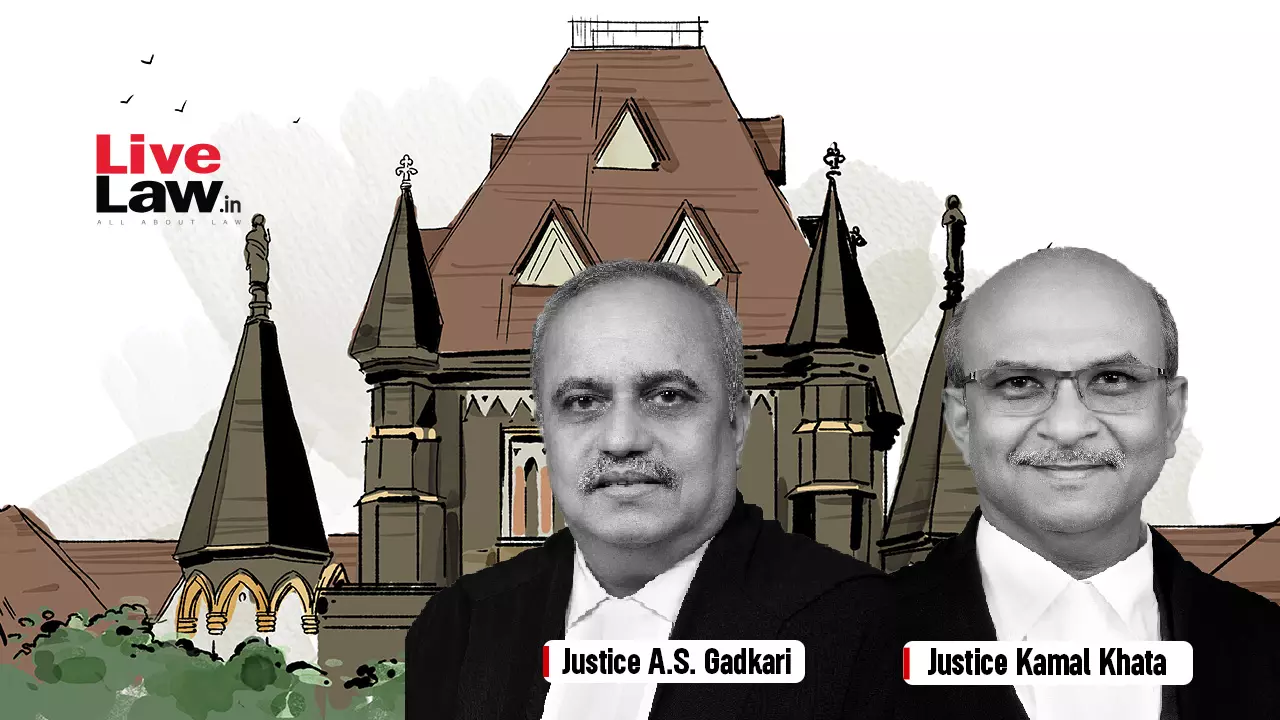
The Bombay High Court recently imposed a hefty cost of Rs 5 lakh on a man for dragging his septuagenarian father to court despite the fact of him (father) suffering from various ailments. The High Court held this to be an abuse of the process and severely reprimanded the son's conduct.� A division bench of Justice Ajay Gadkari and Justice Kamal Khata noted that in February 2026 a single-judge had dismissed the son - Jitendra Megh's plea seeking to refer his 78-year-old father Gorakh Megh to the Mental Health Review Board (MHRB) under section 105 of the Mental Healthcare Act of 2017 to ascertain his mental health.� The single-judge Justice Farhan Dubash had while dismissing Jitendra's plea held that section 105 of the Mental Healthcare Act could not be used as a litigation weapon. Challenging this very order, Jitendra filed an intra-court appeal before the division bench led by Justice Gadkari. However, the bench noted that the appeal was nothing but 'malicious' proceedings invoked against the old father. � "In our view, it is nothing short of an afterthought and a malicious proceeding invoked to drag Gorakh, who is around 78 years old into several proceedings so that he would give up and succumb to Jitendra's demands. Such a conduct by a son against his aged father (suffering from various illnesses) cannot be and should not be tolerated under any circumstances by this Court. He deserves to be severely reprimanded for his conduct. He has clearly abused the process of this Court," the bench said in the August 25 order.� In the instant case before him, the judges noted that Jitendra had challenged the mental health of his father and had even adduced evidence in the form of a medical certificate raising concerns over the father's mental health. However, the single-judge refused to refer the father to the MHRB after noting that the son had himself filed a suit before High Court with respect to partition of an ancestral property and therefore, had claimed that his father'
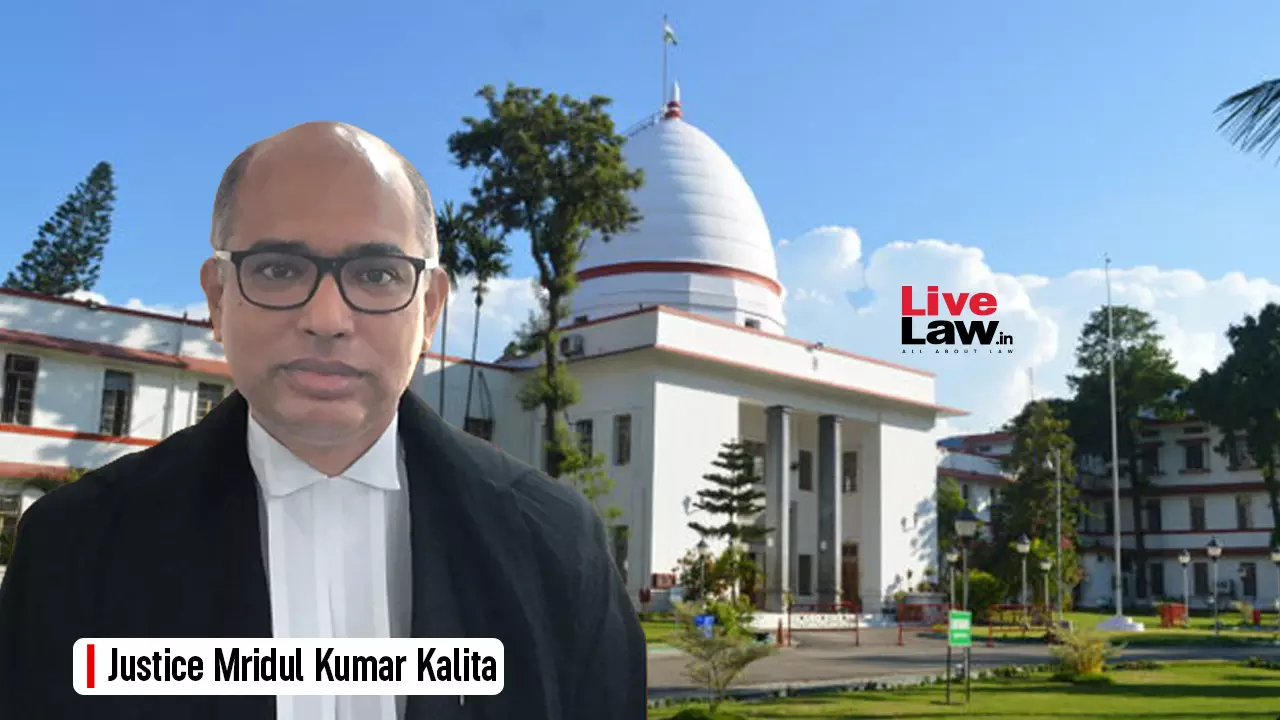
The Gauhati High Court has held that a plaintiff cannot oppose the impleadment of a proper party merely on the ground that, being dominus litis, the plaintiff has the right to choose the persons against whom they wish to litigate. Justice Mridul Kumar Kalita observed, “...the general rule with regard to impleadment of parties, that the plaintiff being dominus litis may choose the person against whom he wishes to litigate, gives way to the discretion of the court under Order 1 Rule 10 (2) of the Code of Civil Procedure, 1908 to implead either necessary or proper parties, as the case may be.” The observation came in a revision petition under Article 227 of the Constitution challenging an order of the Civil Judge Silchar, by which an application seeking impleadment of respondent as a defendant in the title suit was allowed. The petitioner had filed the suit seeking declaration of her right, title and interest over the suit property, eviction of the defendants and permanent injunction. During its pendency, the respondent sought impleadment under Order I Rule 10 read with Section 151 CPC, stating that he had taken a room situated over the suit property on monthly rent from one of the defendants, that a tenancy agreement had been executed and that he was running a retail electric goods shop from the premises. The trial court allowed the application and directed his impleadment. The petitioner argued that the respondent was not a necessary party and that, being dominus litis, the plaintiff had the option to choose who may be impleaded as a defendant. It was also submitted that there was no landlord-tenant relationship between the petitioner and the respondent. The respondent, however, argued that he was in possession of the suit property and that his impleadment was required for effective adjudication and to avoid multiplicity of litigation. The High Court noted that there was no dispute that the respondent was in possession of a room in the suit premises and was running h

The Telangana High Court has directed the Hyderabad Metropolitan Development Authority (HMDA) and Greater Hyderabad Municipal Corporation (GHMC) to follow due process before taking portions of private plots affected by a road Master Plan. The Court directed the authorities to survey and demarcate the affected portions after notice to the landowners and determine their entitlement to compensation in accordance with law. Justice Suddala Chalapathi Rao passed the order on a petition by owners of five plots in Khanamet Village, who complained that their structures and compound walls had been demolished for widening an existing 30-feet internal road to an 80/120-feet road under the Master Plan. The Court observed: “Though learned Standing Counsel for HMDA contended that the master plan cannot be kept in abeyance by virtue of its notification, since it is not the case of the petitioners that the master plan is not properly issued, but their grievance in the writ petition is that the authorities being statutory authorities, are bound to follow the procedure prescribed under law by initiating land acquisition proceedings and pay compensation to the affected portion of the land, and unless and until the compensation is paid, the petitioners cannot be dispossessed from their respective properties and thus, the demolition of the compound wall and the structures as on the date, is nothing but abusive of process of law.” The petitioners claimed ownership and possession over Plot Nos. 138, 140, 141, 142 and 144 in a sanctioned layout formed by the Survey of India Cooperative Housing Society Limited in Khanamet Village. According to them, the layout was approved by the Kondapur Gram Panchayat in 1981 and showed both the Master Plan roads passing through the layout and the internal roads leading to different plots. An existing 30-feet internal road was now proposed to be widened to 80/120 feet, affecting portions of their plots. They contended that since the plots had been purchase
Arbitration And Conciliation Act, 1996 - Section 11 & Non-Signatory Parties — "Veritable Party" Doctrine — Non-signatory to the primary agreement can be bound by the arbitration agreement contained therein if their conduct, participation, and performance of obligations under interlinked agreements demonstrate a mutual intent to be bound — Principles laid down in Cox and Kings applied - Veritable Parties & Non-Signatories - The Supreme Court held that a non-signatory to a primary settlement agreement (Memorandum of Settlement) can qualify as a "veritable party" to the arbitration clause contained therein if the performance of their individual agreement (Share Purchase Agreement) is fundamental and interwoven with the completion of the main agreement - Equal Treatment of Identically Situated Parties - Where multiple non-signatories execute individual Share Purchase Agreements containing similar or identical exclusion/decoupling clauses, the Court cannot differentiate between them to exclude one from arbitration while referring others - The Court observed that drawing a distinction between identically situated persons without a factual basis is unsustainable - Composite Transactions - Participation of a non-signatory in the performance of the underlying contract is the most critical factor indicating an intention to be bound by the arbitration clause - The composite nature of the transaction and commonality of the subject matter suggest that claims against such non-signatory are inextricably interlinked with the issues under arbitration. [Relied on Cox and Kings Limited v. SAP India Private Limited and Another, (2024) 4 SCC 1; Oil and Natural Gas Corporation Limited v. Discovery Enterprises Private Limited and Another, (2022) 8 SCC 42; Paras 13-22] KKH Finvest Pvt. Ltd. v. Ashiesh Shukla, 2026 LiveLaw (SC) 769 : 2026 INSC 803 Arbitration and Conciliation Act, 1996 – Section 9, Section 9(1)(ii)(e), Section 34 and Section 36 – Maintainability of Section 9 Petition at Pos
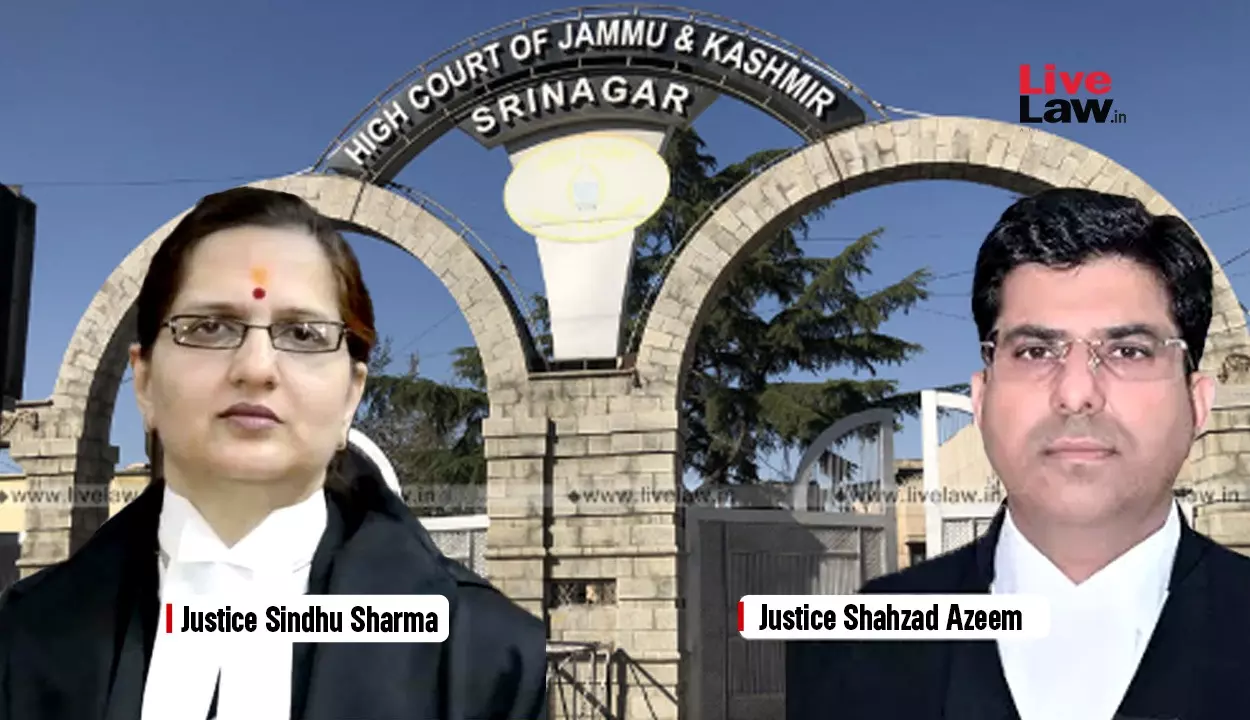
The High Court of Jammu & Kashmir and Ladakh has held that the right of indemnity under Section 12(2) of the Workmen's Compensation Act does not entitle the principal employer to unilaterally withhold or appropriate amounts lying in relation to an independent contract. The Court observed that any right of recovery must be enforced through legally permissible procedures before a competent forum. The Court was hearing a Letters Patent Appeal filed by the J&K Lake Conservation and Management Authority against the judgment and order passed by the Single Judge, whereby the communication rejecting the respondent's claim for release of his Call Deposit Receipt was quashed and the Authority was directed to release the CDR amount of Rs. 2,24,750/-. A Division Bench of Justice Sindhu Sharma and Justice Shahzad Azeem, while dismissing the appeal, observed, "In the absence of a specific 'recovery' or 'lien' clause in the agreement of the Nigeen contract allowing adjustments from other works, the appellants cannot bypass due process. A right to be indemnified must be enforced through legally recognized channels either by establishing a claim before a competent forum or by adjusting bills within the specific contract where the liability arose." The Court further observed, "Unilaterally, withholding the CDR of a separate project amounts to executive high-handedness and violates the principles of natural justice and contractual propriety." Background: Pursuant to NIT, the respondent, being the lowest bidder, was awarded the contract for construction of a sewer line at Nigeen and deposited a Call Deposit Receipt amounting to Rs. 2,24,750/-. The proposed sewer line was to pass through land belonging to the Tourism Department and private land, due to which the respondent could not execute the work. Although the matter was subsequently resolved, the respondent declined to resume the work. The Authority contended that no substantial work was executed. The respondent had also been awarde
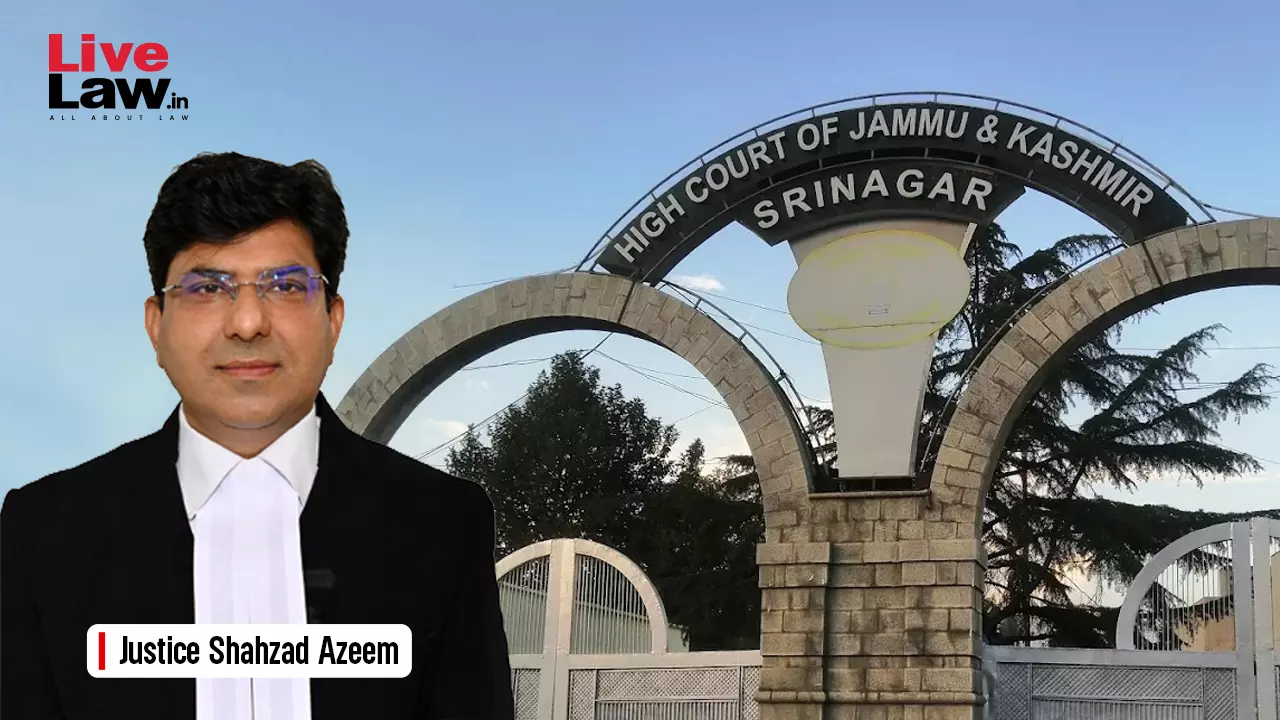
The High Court of Jammu & Kashmir and Ladakh has held that a defective summary suit need not meet a dead end as een where the requirements of Order XXXVII of the Code of Civil Procedure, 1908 are not fulfilled, the Court can treat the suit as an ordinary civil suit and proceed with it in accordance with law. The Court observed that the failure to satisfy the conditions of a summary suit does not warrant dismissal where the plaint otherwise discloses an underlying debt and the defendant's refusal to repay it. The Court was hearing a Civil First Appeal directed against the judgment and decree passed by the learned Additional District Judge, Budgam, whereby the plaint was rejected under Order 7 Rule 11 of the CPC on the ground that the suit based on a stale and unrepresented cheque was not maintainable under Order XXXVII CPC. A Bench of Justice Shahzad Azeem, while allowing the appeal, observed, "Even if the finding of the Trial Court that the suit is not maintainable under Order XXXVII is accepted, the appropriate course was to convert the suit into an ordinary money recovery suit rather than to reject the plaint outright. The plaint clearly discloses: (i) Advancement of a loan of ₹5.00 lakh; (ii) Issuance of a cheque of ₹4.00 lakh by way of part payment/acknowledgment of the debt; and (iii) Subsequent refusal by the respondent to repay the amount. These averments constitute a complete cause of action for a regular suit for recovery of money." The Court further remarked, "Rejection of the plaint extinguishes the claim and forces the plaintiff to institute a fresh suit subject to limitation. Conversion preserves the suit and enables adjudication on merits." Background: The case arose from an alleged transaction whereby the appellant extended a friendly loan of ₹5.00 lakhs to the respondent for the performance of Hajj by his father. In discharge of the liability, the respondent issued a cheque for ₹4.00 lakhs in December 2024 with a promise to pay the balance ₹1.00 lakh
The Madhya Pradesh High Court has expedited a 2009 civil suit pending in the District Court of Indore, observing that the matter is�"required to be attended on priority basis". [2026 LiveLaw (MP) 343] These observations were made by the bench of Justice Sandeep N Bhatt in a petition seeking appropriate directions for a civil suit to be sent back to the Court of the 31st District and Additional Judge in Indore, before whom the matter had reached the stage of final arguments before it was transferred to another Judge.� The bench directed, "As counsels for all the parties assured this Court that they will cooperate in the process of hearing and will not seek unnecessary adjournment as now matter is required to be argued finally by making final arguments, therefore, the concerned Judge where matter is now transferred shall give priority to this matter by hearing the arguments of the parties if required on day to day basis or by giving short adjournment if in case of need and try to dispose of the proceedings by considering the arguments of the parties in appropriate manner and also considering the material available on record in accordance with law as expeditiously as possible but not later than 90 days from the date of receipt of copy of this order".� The counsel for the petitioner informed the court that oral and written arguments had already been submitted, and the matter was then transferred to the 32nd District Judge without any cogent reason, and this was the third time the matter was transferred. The petitioner filed an application under Section 24 CPC before the Principal District Judge.� The counsel further submitted that the 31st District Judge had already heard the detailed and final arguments on April 7, 2026 and subsequently on April 17, 2026 but in the meanwhile the suit was transferred to 32 District Judge causing delay.� The court, after haring the submission, considered it appropriate to seek explanation from Principal District Judge regarding the groun

The District Consumer Disputes Redressal Commission, Kupwara, has allowed a complaint filed by a house owner against two contractors, a cement dealer and a cement manufacturer, holding that the construction work undertaken by the contractors was deficient and had caused damage to the complainant's residential house. The Commission relied on the findings of the R&B Department's technical assessment while granting relief to the complainant. Facts The complainant, Ghulam Mohidin Wani, owned land at Trehgam, Kupwara, where he planned to construct a residential house. After obtaining the required permission, OP Nos. 1 and 2 undertook the construction work and provided him a list of construction materials, including Arco-brand cement. The complainant purchased the cement from OP No. 3, Najjar Trading Company, manufactured/supplied by OP No. 4, Dawar Cements Pvt. Ltd. After completion of the construction, cracks developed in the building's slab, allegedly making the house unsafe for habitation. The complainant approached the opposite parties for redressal, but alleged that they failed to resolve the issue, leading him to file a consumer complaint alleging deficiency in service and unfair trade practice. During the proceedings, OP Nos. 1–3 failed to file their responses and were proceeded ex parte, while OP No. 4 denied the allegations and claimed that the cement was of standard quality. The R&B Department, Kupwara, inspected the house and assessed the damage at ₹4,04,943. Observation and Decision The Commission observed that OP Nos. 1 and 2, having undertaken the construction work, were responsible not only for execution of the work but also for ensuring the quality and standard of the materials used. The Commission found that the construction was deficient and that the complainant had suffered substantial damage to his house. It relied upon the R&B Department's technical report, which assessed the loss at ₹4,04,943. The Commission also noted that the opposite parties fail
The Gauhati High Court has held that the remedy for revocation of a succession certificate under Section 383 of the Indian Succession Act does not make an application under Order IX Rule 13 CPC irrelevant where the succession proceedings had gone ex parte against a legal heir who was not made a party. Justice Mridul Kumar Kalita observed, “The question that as there is a specific provision is there in the Succession Act under Section 383 of revocation of the succession certificate, the respondent ought to have preferred an application under the said provision also is not of much relevance in as much as the fact remains that the court of the learned Additional District Judge proceeded ex parte against the present respondent in Misc. (Succession) Case No. 17/2021.” The observation came in a revision petition under Section 115 CPC challenging an order of the Additional District Judge (FTC-2), Tinsukia, by which a succession certificate earlier granted to the petitioners was set aside. The petitioners had obtained the succession certificate under Section 372 of the Indian Succession Act in respect of the debts and securities left by their deceased father after pleading that they were his only legal heirs. Their sister, who was also a legal heir, had not been made a party to the proceedings. She thereafter moved an application under Order IX Rule 13 CPC read with Section 151 CPC, upon which the succession certificate was revoked. The petitioners contended that as the respondent had not been made a party to the succession proceedings, there was no question of proceeding ex parte against her. They further submitted that the Indian Succession Act contained a specific provision under Section 383 for revocation of a succession certificate and that she ought to have proceeded under that provision. The High Court, however, found from the materials on record that the petitioners' statement that they were the only legal heirs of the deceased was false. The Court held, “On perusal
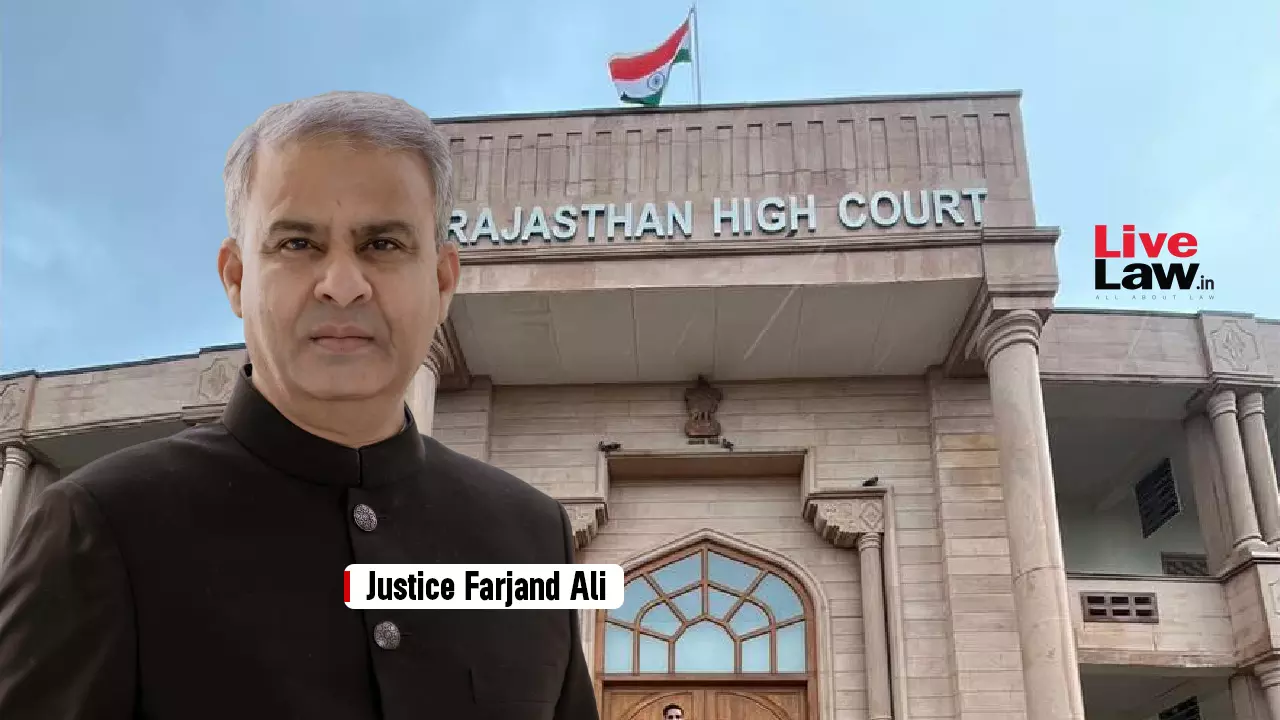
The Rajasthan High Court has held that a trial court cannot allow a statutory objection concerning stamp duty to remain pending for years merely because the issue involves mixed questions of law and fact. The bench of Justice Farjand Ali�clarified that while Order XIV Rule 2 CPC generally requires courts to decide all issues together, and it does not permit an objection that can be dealt with through a prescribed statutory procedure to remain in procedural limbo. The Court was hearing a petition challenging an order of the Additional District Judge, Jodhpur Metropolitan, which had declined the petitioners' request to decide as a preliminary issue whether the documents relied upon by the plaintiffs were inadmissible for being unregistered and insufficiently stamped. This was framed as Issue No.4 in the suit. The underlying civil suit concerns property and was instituted on the basis of agreements dated March 4, 1976 and June 21, 2001. The defendants disputed the enforceability and admissibility of the documents, contending that they were neither duly stamped nor registered. Issue No.4 was subsequently framed on whether the document relied upon by the plaintiffs was inadmissible on account of insufficient stamp duty and non-registration. The issue, however, remained pending for several years, with repeated dates being granted for hearing and the suit being transferred between courts. It was petitioners' case that the effect of such non-registration and insufficiency of stamp, should be decided by the trial court as preliminary issue. This application was rejected by the trial court on the ground that this issue was not a pure question of law but a mixed question of law and fact. Hence, the trial court directed the suit to be proceeded further as per law. To challenge the order of the trial court, the petitioners filed the present petition before the Court. It was highlighted that the issue had remained pending for several years and repeated dates were granted for hear
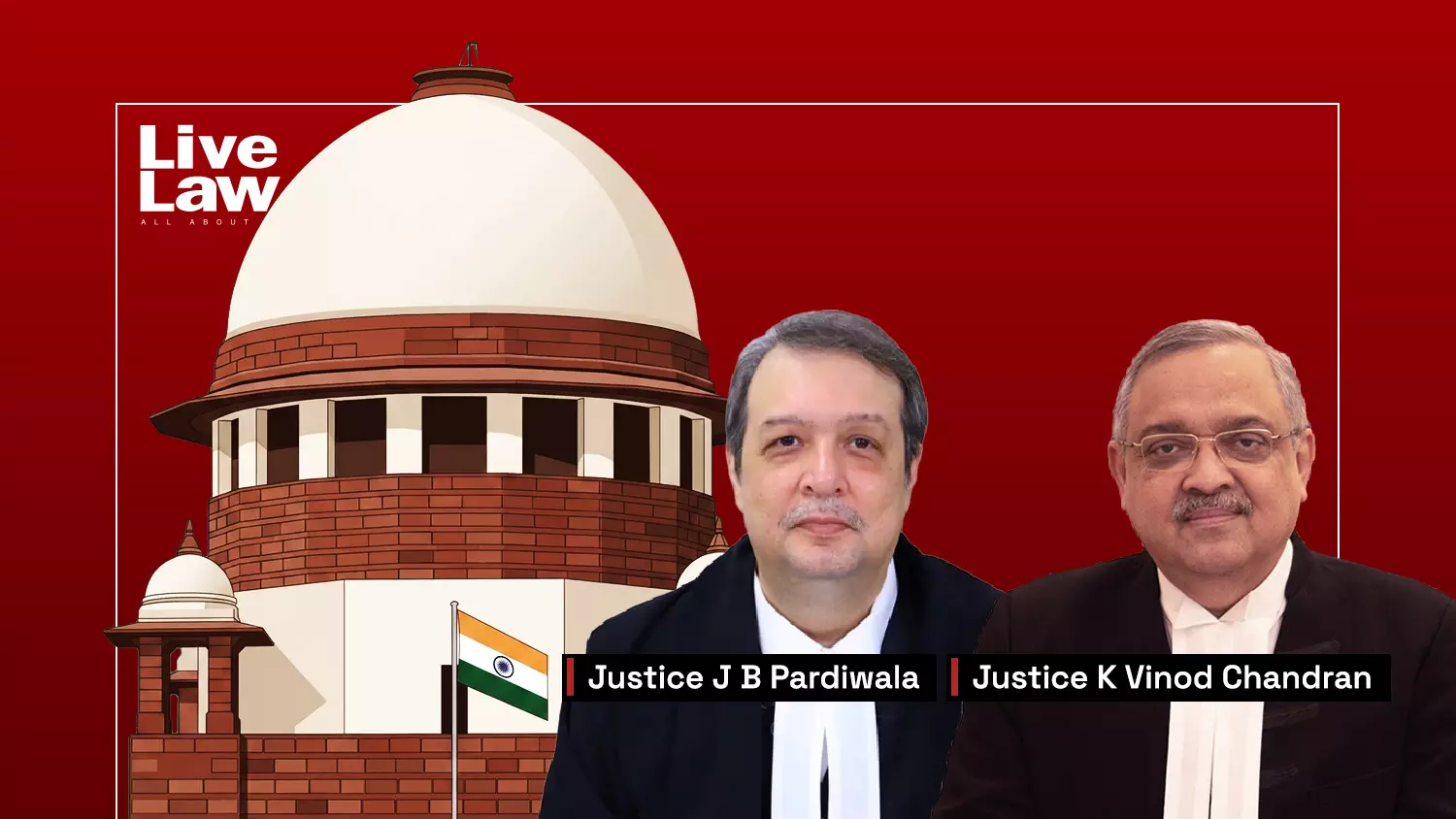
The Supreme Court has held that a plaint can be rejected at the threshold stage if the pleadings make it evident that the plaint is barred by limitation. “…the Court cannot be hesitant in granting relief of rejection of a plaint when it is so obvious from the pleadings itself.”, observed a bench of Justice JB Pardiwala and Justice K Vinod Chandran. The Court said that while limitation is generally a mixed question of fact and law which requires adjudication in trial, however, where the facts about the plaint being barred by limitation are glaring from the plaint averments themselves, the court must exercise its power under Order VII Rule 11 of the Code of Civil Procedure, 1908 to reject the plaint at the threshold stage without waiting for a trial. The case arose from a Joint Venture Agreement entered into on August 18, 2014, between the appellant (landowner) and the respondent (developer). The respondent was to construct eight flats on two plots owned by the appellant. Upon completion, 56% of the super built-up area was to go to the landowners, and the remaining 44% was to be conceded to the developer. The appellant cancelled the Joint Venture Agreement on April 20, 2016, alleging that construction was not completed within the stipulated 15 months. This was followed by a lawyer's notice on July 22, 2016. The respondent replied on July 23, 2016, resisting the cancellation. The parties exchanged further communications, and in June 2017, the appellant took possession of the properties. The respondent filed the suit for specific relief for division and allotment of 44% share in October 2022, more than six years after the first communication cancelling the agreement. The Appellant-defendant sought rejection of the plaint under Order VII Rule 11 of CPC on grounds of limitation. The trial court and High Court rejected the defendant's application, following which an appeal was filed before the Supreme Court. Setting aside the impugned orders, the judgment authored by Justi

'Earnest money or deposit' is some amount given at the execution of the contract, which serves two purposes- (a) it acts as a guarantee that the contract will be honoured by the person who gives it and is forfeited in case he defaults; (b) it also serves as part- payment if the contract goes through. The issue which needs consideration is whether section 74 of the Indian Contract Act, 1872(ICA) is applicable to forfeiture of earnest money or not? Position of English law regarding forfeiture of earnest money English common law provided a distinction between liquidated damages and penalty. It allowed the recovery of liquidated damages- which were a genuine attempt to estimate in advance the loss which the claimant would be likely to suffer from a breach of contract, but provided that if a clause is in the nature of penalty (which were termed as an exorbitant sum incorporated into a contract to deter a party from breaching the terms of contract), then it was unenforceable. With that being stated, although there was a difference in how common law treated liquidated damages clause and a penalty clause, there is no doubt that position with regard to forfeiture of earnest money was clear, and it treated the forfeiture of earnest money differently from the other two. The common law allowed the forfeiture of earnest money in case of a breach of contract. It was also not necessary that the party had to prove that it has suffered some loss in order to forfeit it. Although it was in essence a type of penalty, but it was treated as an exception by common law. An earnest money which is not reasonable may be challenged as a penalty clause. Indian law and the interpretation of Supreme Court The law regarding stipulations contained in the contract or a penalty clause is incorporated under section 74 of ICA. The first judgment in line is Fateh Chand v. Balkishan Das 1963 INSC 1(Fateh Chand), which was a Constitutional Bench judgment. This case cannot be considered to lay down the law
![Legal Researcher Vacancy At The Rajasthan High Court, Jodhpur [Apply Now]](https://www.livelaw.in/h-upload/2022/01/19/407894-rajasthan-high-court-jodhpur-bench.jpg)
Image: PatrikaImage: PatrikaThe Rajasthan High Court, Jodhpur invites online applications for the post of Legal Researcher on contractual basis for deputing with Hon'ble Mr. Justice Arun Monga. Name of the Post: Legal Researcher No. of Post: 02 (Two) Age Limit: 33 Years Essential Qualification and Experience A candidate must be a fresh law graduate or Postgraduate in law from universities/colleges/ Institutions established by law in India. A candidate must have a basic knowledge of computers. How to apply? To apply online, click here The last date to submit the online application is 20.08.2026 To Access Official Notification, click here