
High Courts
Courts & Judicial Administration


What happens when the court grants a prima facie interim order, and it takes the shape of a long-lasting wait? Suppose investing all your savings in a project, and then the Court puts a stay on that project for five years, with no certainty that, even after five years any final decision will come, or another wait in the mask of an interim order will be there. An interim order is a temporary order taken during the pendency of a case to protect the subject matter. It includes, inter alia, a stay order, a temporary injunction and status quo order. The Court grants such an order to preserve the status quo pending final decision. The Court relies upon a three-part test, as reaffirmed in Wander Ltd. v. Antox India, to grant an interim order consisting firstly of a prima facie case, which means that the plaintiff is required to establish that the case deserves a full trial. Secondly, balance of convenience, meaning that not granting an interim order must not outweigh the damage caused to the plaintiff if such an order were granted. Lastly, irreparable injury, which means that the plaintiff has to establish that any compensation cannot be adequate to grant relief to the plaintiff. The plaintiff is required to establish the three elements cumulatively for the grant of an interim order. When COVID broke out, India's second-largest retail company, Future Retail, owing to financial difficulties, was struggling to survive. Stores were closing, creditors demanded repayment, banks started recovery proceedings, and to stop insolvency, it came into an agreement with Reliance Retail to sell its retail business with a proposed transaction of ₹ 247000 cr. However, Future Retail had a pre-existing agreement with Amazon whose terms restrict selling its retail business to Reliance. This led to a dispute reaching emergency arbitration, leading to an interim order that Future Retail could not proceed with the agreement with Reliance Retail until the final arbitral award, which came after fi
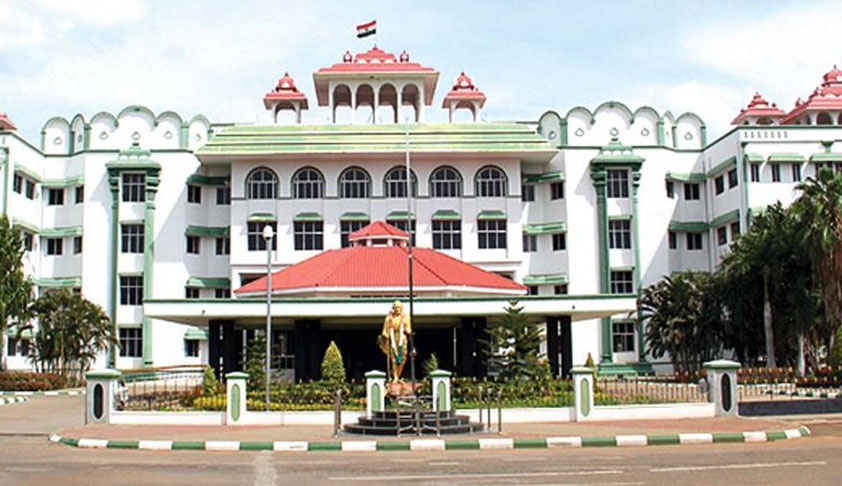
The Madras High Court has directed all Principal District Judges and other judges in the District Judiciary to dispose of petitions for cancellation of bail within 4 weeks of service of notice. [2026 LiveLaw(Mad) 410] The bench of Justice AD Jagadish Chandira and Justice B Murugesan observed as under, “ In view of the above, the Principal District Judges and the other Judges where petitions for cancellation of bail are pending, shall ensure that such petitions are decided within a period of four weeks from the date of hearing immediately after the service of notice,” the court said. The court was hearing a habeas corpus plea seeking to produce a man, who was detained under the Tamil Nadu Goondas Act. While disposing the plea, the court noted that in a previous case, after coming across several instances where police resorted to passing detention orders instead of carrying out the investigation in time, the court had directed the Director General of Police to form a committee to ensure that chargesheets against habitual offenders are filed on time so that they are not released on statutory bail. The court had also directed the DGP to file a status report. Taking note of the status report, the court had issued further directions to ensure that a proper process is evolved in dealing with persons committing offences by misusing the liberty granted to them by way of bail. The court had directed that applications for cancellation of bail should be passed instead of detention orders. The court had also directed the Principal District Judges of concerned Districts to follow up on pending cancellation of bail pleas within 4 weeks. The court had also asked the District Judges to file status report. As per the court's direction, reports from various districts were received with respect to the pending cases filed for cancellation of bail in various districts. The Government Advocate also informed the court that the Supreme Court had also directed the High Courts to issue necess
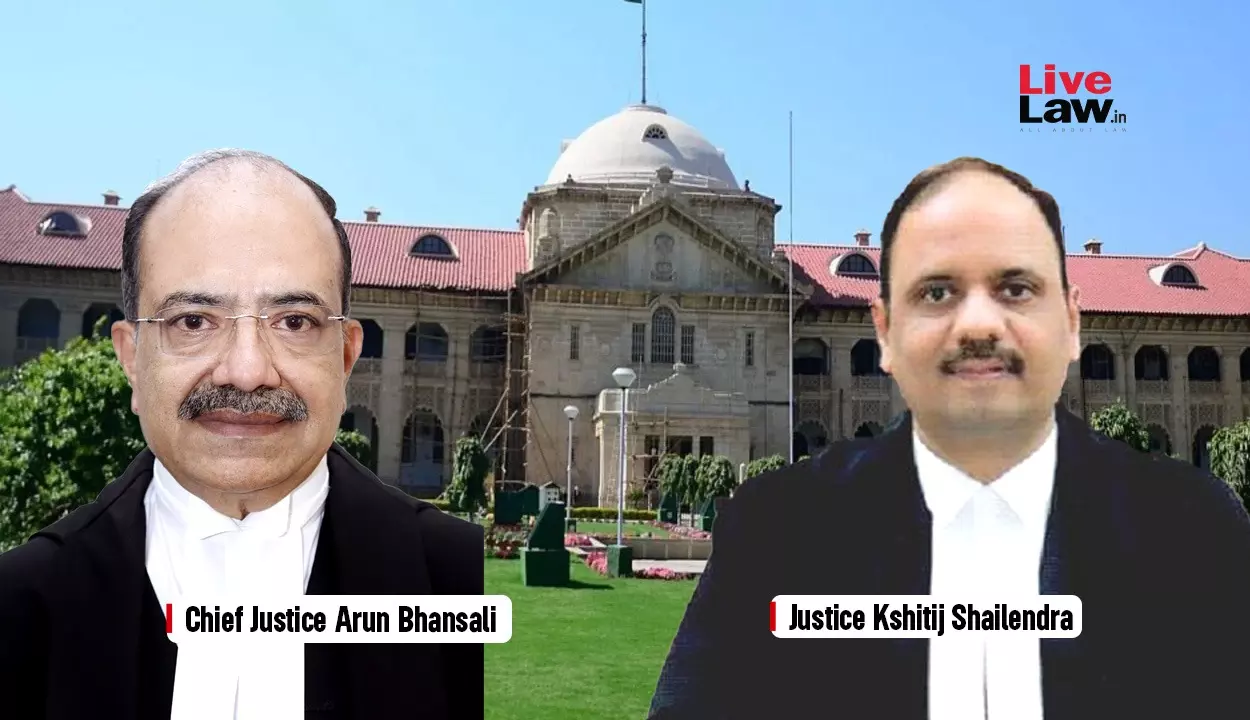
The Allahabad High Court has directed the registration of a criminal contempt case against a man after finding that he filed a review petition in the capacity of a party-in-person containing 'contemptuous' language against a sitting Judge of the High Court. A Bench of Chief Justice Arun Bhansali and Justice Kshitij Shailendra passed the direction while considering a review petition filed against the Bench's earlier order dated July 9, 2026, by which a special appeal filed (against Single Judge's order) by the petitioner had been dismissed as not maintainable. Taking into account the averments made in the review petition by party-in-person Vishram Singh, the Court observed thus: " The review petition which has been filed by the petitioner and who has been contesting the present proceedings in person, is replete of language qua the learned Single Judge, whose judgement was appealed against and the appeal was dismissed as not maintainable, which is, on face of it, contemptuous". The Bench then referred to portions of the review petition containing allegations that orders had been passed 'fraudulently', 'illegally' and "without jurisdiction". The petitioner had also alleged that an order was passed through 'deception' and that non-disclosure of certain statements in the order amounted to deceiving him. Background of the dispute The dispute relates to the petitioner's attempt to appear and argue cases on behalf of litigants despite not being an enrolled Advocate. The issue arose before the Single Judge in September last year after one Sheel Nidhi Jaiswal sought permission to have the petitioner (Vishram Singh) represent and argue his case before the trial court. The trial court had earlier declined the request on the ground that the petitioner was not an enrolled Advocate. The petitioner thereafter approached the High Court and claimed to be a “pleader”, seeking permission to appear and argue on behalf of the litigant. During the proceedings, he stated that he was an eng

The Allahabad High Court has referred the conduct of senior IAS officer and Devi Patan Mandal Commissioner Durga Shakti Nagpal to the court dealing with criminal contempt matters after a Judicial Officer alleged that the Commissioner attempted to influence and intimidate her over a phone call in connection with a pending civil suit. A Bench of Justice Syed Qamar Hasan Rizvi observed that the tone and language of the alleged telephonic conversation gave a "direct impression that the Presiding Officer of the Court was tried to be influenced". The Court further termed it as 'shocking' that a litigating party/state could approach a court through such a phone call in the context of a pending matter. The observations were made in a transfer application concerning a 1997 Suit which had been pending before the Civil Judge (Senior Division), Gonda for nearly three decades. Case in brief The bench was dealing with an application seeking transfer of the 1997 suit from the concerned Civil Judge (Senior Division), Gonda, to another competent court. The suit, pending since 1997, involved a dispute concerning government land. The issues were framed in 2018 and the matter is at the evidence stage. During the hearing, the bench was apprised that Civil Judge (Senior Division) Shabina Khan, who is handling the suit, reported to the District Judge an alleged phone conversation with Commissioner Nagpal and requested that the case be transferred to another court. However, before the High Court could decide the transfer plea, the District Judge, Gonda, had already withdrawn the suit from the concerned Civil Judge's court and transferred it to another court of equivalent jurisdiction, the Court of Civil Judge (Senior Division)/F.T.C. Naveen/ACJM, Gonda. The High Court therefore said that the transfer application had "lost its efficacy" since the relief sought had already been granted by the District Judge's transfer order, and the application was consigned to the record. The Court, however
The Court also observed that release of probation does not bar disciplinary proceedings against the officer.

The Kerala High Court on Wednesday (August 19) granted 6 weeks' time to the State government to fill up the existing vacancies in the Kerala State Waqf Board. The Division Bench of Chief Justice Soumen Sen and Justice Syam Kumar V.M. today recorded the submission of the Advocate General K. Jaju Babu appearing for the State that steps have already been taken to fill up the vacancies in accordance with the amended Waqf Act. "It is for the State government to take action in accordance with law. At this stage, we are only seized with the problem of proper functioning of the Waqf Board where admittedly there are 3 vacancies. Since the State has initiated the process and has taken a stand that the State is going to take steps for filling up the vacancies, we adjourned this matter for a period of 6 weeks in order to enable the State to take appropriate steps for filling up the vacancies." The Court further clarified that it is not presently considering whether the Board is required to be reconstituted for not including other statutorily-mandated members: "In our interim order, we have not prevented the Board from functioning and as we are of the view that the State Govt should take up expeditious steps to fill up the remaining vacancies or to take any other decision that the State Govt may deem fit with regard to the constitution. We are not caught in the merits...Whether the Board is required to be reconstituted for violation of Section 14(6) is not required to be gone into at this stage. We are not expressing any opinion with regard to the alleged violation. It is for the State to take appropriate steps in accordance with law." During the last hearing, the Court had orally observed that there is no order restraining the State Government from reconstituting the Kerala State Waqf Board and that in the interim, the Government can appoint the statutorily mandated non-Muslim members so that the Board can continue to function.� Background All the PILs have challenged the non-i

A litigant from a remote district could check the status of her case on her mobile phone. A lawyer from Chennai could argue in front of a bench in Delhi without getting on a plane. A law student from a small town could watch a hearing of the Constitution Bench, perhaps for the first time, without setting foot in a courtroom. None of this is incidental. It is the product of nearly two decades of meticulous planning and execution by India's judiciary and executive in one of the most ambitious modernisation programmes that any large legal system has attempted. With Indian courts progressing towards e-filing, virtual hearings, AI-enabled legal research, and an exponentially growing volume of electronic evidence, critical questions arise: Where does the legal ecosystem, comprising legal, technological, and institutional dimensions, currently stand, and what is needed for it to effectively harness this ongoing technological transformation? Furthermore, how close are we to fulfilling the promise enshrined in the Constitution of India of securing justice for all, particularly in the context of judicial delays and the huge backlog of cases? The contention being made is that while India has been very quick to build legal machinery and technology, it has been relatively slow in building people and institutions to utilize those laws and technologies, and it's that balance that really determines readiness. The e-Courts Project: Beyond the Pandemic Many people have the impression that India started pushing for its digital courts only when COVID-19 came around, but this is not true. The National e-Governance Plan also contained the e-Courts Mission Mode Project of 2007. For this aspirational project, Phase I (2011-15) had ₹935 crore and Phase II (2015-23) had ₹1,670 crore. Phase II had already deployed computerised case information systems, wide-area network connectivity and e-filing services in most district and subordinate courts before the pandemic forced all court buildings to
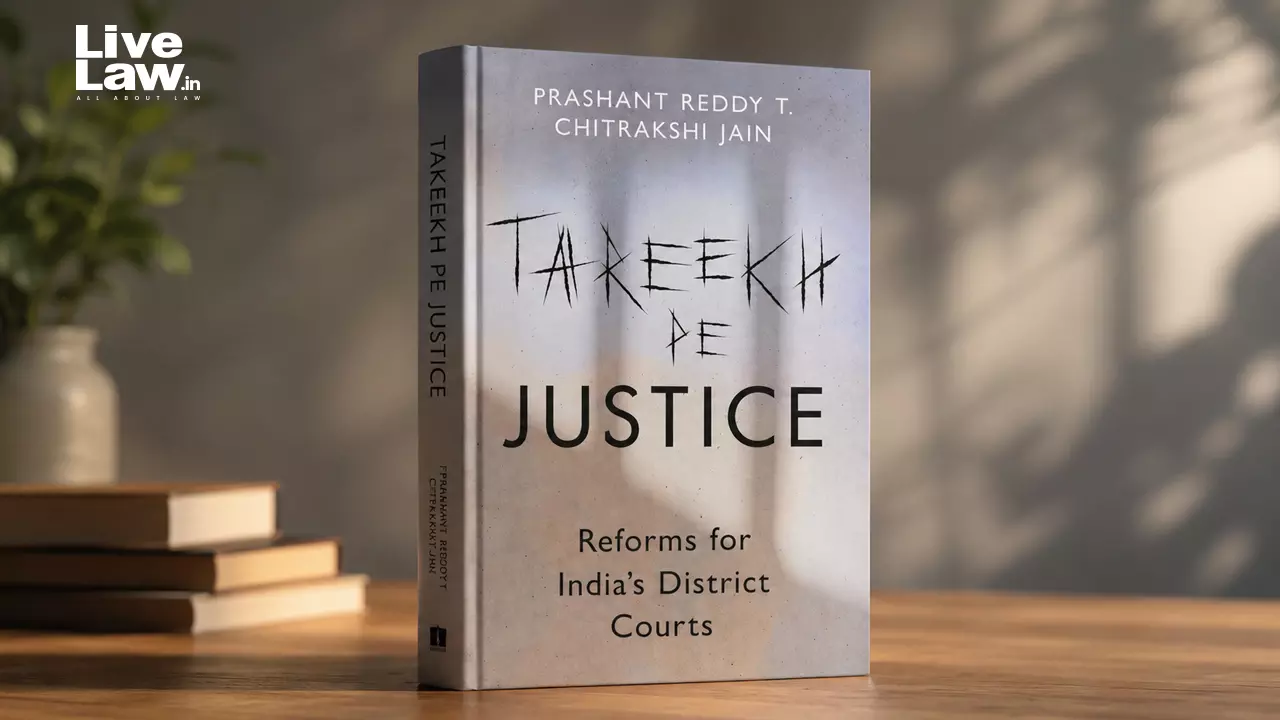
�On 31 August and 1 September 2024, the Supreme Court (“SC”) organised the “National Conference of the DISTRICT JUDICIARY Strengthening the Frontline Judiciary”. The� conference was divided� into six sessions namely, Infrastructure and Human Resources, Courtrooms for All, Judicial Wellness for Judges in India: A Comprehensive Perspective, Case Management, Judicial Training: Curriculum, and Methods, Bridging the Gap. Also last year on 1 February 2025, the SC held the� “NATIONAL CONFERENCE ON ADDRESSING ISSUES FACED BY THE STATE JUDICIARY.” The�conference was followed by four technical sessions: Narrowing the Gulf between Institution and Disposal of Cases, Ushering Uniformity in Case Categorization and Leveraging Technology for Justice Delivery, Addressing issues Pertaining to Human Resources in the District Judiciary, Enhancing Professional Proficiency. A common thread running through both conferences was the emphasis on resource constraints as a major impediment to judicial reform and effective justice delivery. Indeed, discussions on reforming district courts often revolve around what may be termed the "resource crunch narrative", namely the belief that delays and inefficiencies are primarily the result of inadequate infrastructure, funding, and personnel. However, the problems confronting the district judiciary are far deeper and more structural in nature.� It is this structural dimension that Prashant Reddy T and Chitrakshi Jain seek to examine in Tareekh Pe Justice: Reforms for India's District Courts. The authors delve into the institutional fault lines within the judiciary that contribute to delays in justice delivery. Drawing upon empirical data and policy analysis, they offer a range of practical recommendations aimed at improving the efficiency and functioning of district courts.� The book is divided into three parts. The first part, comprising five chapters, examines the challenges faced by judges at different stages of their service. The second part, spre
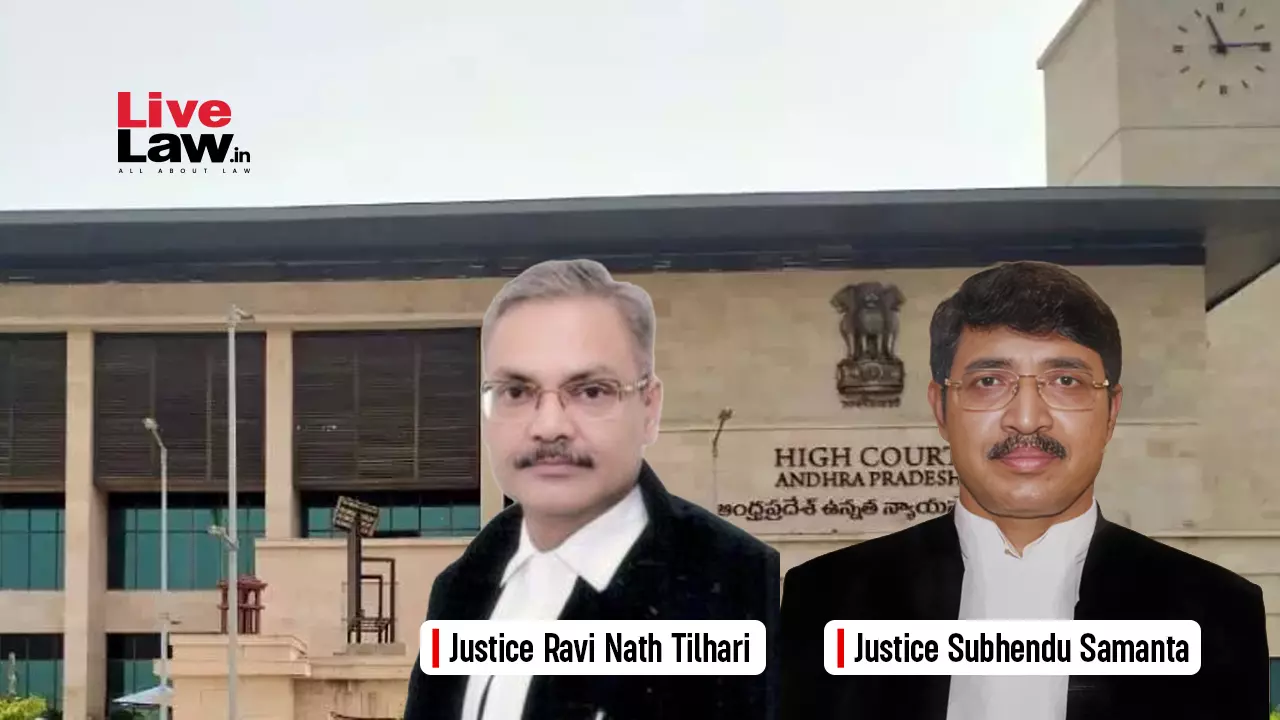
The Andhra Pradesh High Court has held that an appeal under Section 19 of the Contempt of Courts Act, 1971 is maintainable only against an order or decision of the High Court passed in exercise of its jurisdiction to punish for contempt, that is, an order imposing punishment for contempt.� In doing so, the Court held that an order closing contempt proceedings after recording compliance with the writ court's directions cannot be challenged under Section 19 of the Act. For context, Section 19 states that an appeal shall lie as of right from any order or decision of High Court in the exercise of its jurisdiction to punish for contempt— (a)where the order or decision is that of a single Judge, to a Bench of not less than two Judges of the Court; (b) where the order or decision is that of a Bench, to the Supreme Court: Provided that where the order or decision is that of the Court of the Judicial Commissioner in any Union territory, such appeal shall lie to the Supreme Court. A Division Bench of Justice Ravi Nath Tilhari and Justice Subhendu Samanta�observed: “A bare perusal of Section 19(1) of the Act, 1971, shows that the appeal shall lie as of right from any order or decision of High Court in the exercise of its jurisdiction to punish for contempt. Clause (a) provides that where the order or decision is that of a single Judge, appeal lies to a Bench of not less than two Judges of the High Court. The expression used in Section 19(1) of the Act,1971 is in the exercise of its jurisdiction to punish for contempt, which is most relevant in determining the maintainability of the appeal under Section 19 of the Act... The order under challenge is not one imposing punishment upon the respondents in the contempt proceedings. It is an order closing the contempt case recording that the orders passed in writ petition No.937 of 2023 dated 10.07.2024-have been complied with. We are of the considered view that an appeal would not lie under Section 19(1)(a) of the Contempt of Courts A

Rajya Sabha MP Ashok Mittal welcomed the legislation but said the measure should be viewed as part of a wider programme of judicial reform, particularly because the overwhelming majority of pending cases are before the High Courts and district judiciary.
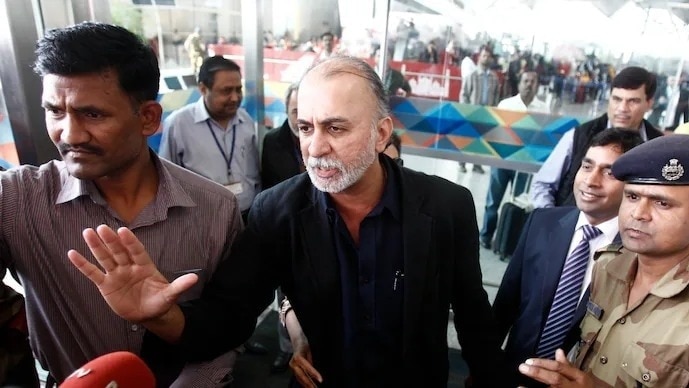
How Tarun Tejpal verdict exposes trial court's 'bias and errors' in rape case